What Are Fillers Best for in Cary, NC

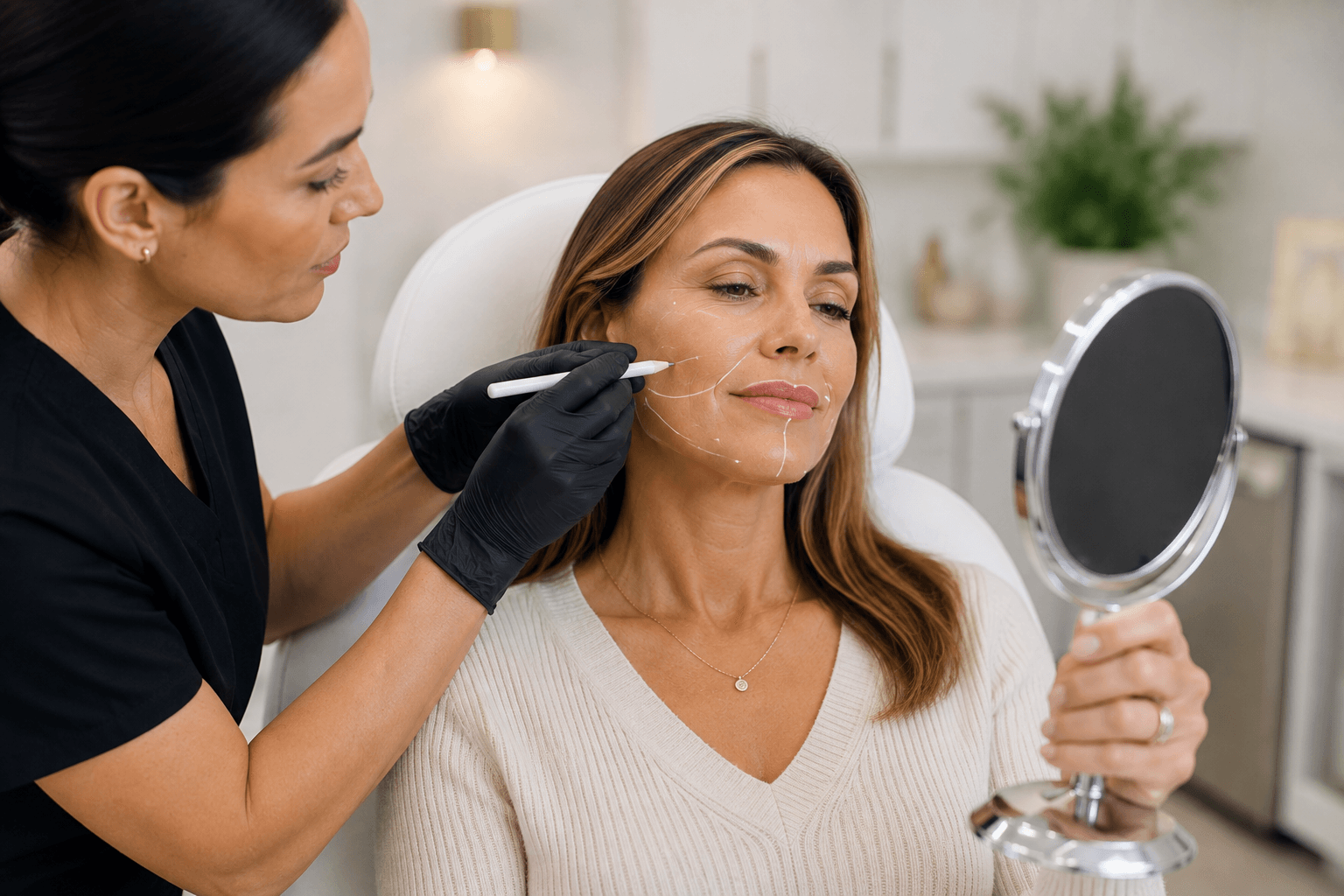
Ask five people what fillers are for and you will likely get five different answers. Some think of lips. Others picture cheekbones. Some assume fillers are only for smoothing deep wrinkles. The truth is that fillers are a flexible tool, and the right area to treat depends entirely on what concern you are trying to address.
Updated this month, this guide breaks down which facial areas fillers actually help, so you can walk into a consultation already knowing what to ask about rather than guessing.
What Problem Are You Actually Trying to Solve?
Before asking what fillers can do, it helps to identify the specific concern. Is it thinning lips? A tired looking under-eye area? A jawline that has lost its shape? Fillers are not a single treatment applied the same way everywhere. The product, depth, and technique change depending on the area and the goal.
What Concerns Do Lip Fillers Address?
Lips naturally lose volume with age, and for some people, thin lips are simply a lifelong feature they would like to soften. Common concerns include:
- Lips that have thinned noticeably over time
- Uneven or asymmetrical lip shape
- Fine lines forming above the upper lip
- A desire for more defined lip borders
Lip filler is one of the more conservative, easily adjustable treatments, since results can be built gradually. Learn more about lip treatment options available.
What Concerns Do Cheek Fillers Address?
Cheek hollowing is one of the most common reasons people seek out fillers, often without realizing that is what they are noticing. Concerns include:
- A flatter, less defined cheek area compared to years past
- Nasolabial folds that appear deeper as the cheek loses support
- A generally tired or gaunt appearance despite adequate sleep
Because the cheeks act as a support structure for the lower face, restoring volume here often improves the appearance of folds and jowls indirectly. Explore cheek treatment details for more.
What Concerns Do Jawline and Chin Fillers Address?
A softened jawline is one of the more frustrating signs of facial aging, since it can happen even in people who maintain a healthy weight. Common concerns include:
- Loss of a clear jawline contour
- A recessed or underdeveloped chin
- Early jowling along the lower face
Filler can rebuild definition along the jaw and chin without surgery. See more on the jawline treatment area.
What Concerns Do Under-Eye Fillers Address?
Hollowing under the eyes creates a shadow that reads as fatigue, even to well rested people. This is one of the more delicate filler applications and typically requires an experienced hand, since the skin here is thin and prone to visible product if overfilled.
What Concerns Do Fillers Address Around the Nose and Mouth?
Nasolabial folds, the lines running from the nose to the corners of the mouth, deepen as cheek volume decreases. Marionette lines, which run from the mouth to the chin, follow a similar pattern. Fillers soften both by restoring the volume that has shifted or thinned nearby.
How Do You Know Which Area to Start With?
Most patients do not need every area treated at once. A good starting point is usually the concern that bothers you the most in photos or the mirror, whether that is a specific line, a hollow, or a loss of shape. From there, an injector can map out whether the issue is isolated or connected to a broader pattern of volume loss elsewhere on the face.
How Does Fillers Compare With Other Treatments Offered at Vitalize Wellness?
Fillers are often paired with complementary treatments depending on the full picture of what someone wants to address. Neurotoxin treatments like Botox target expression lines caused by muscle movement, which is different from the structural volume that filler restores. You can compare the two through Vitalize Wellness's neurotoxin services and dermal filler services.
Who Should Consider Fillers?
Fillers tend to be a good fit for people who:
- Have a specific area of concern rather than overall skin dullness
- Want results that are visible immediately
- Prefer a treatment that can be adjusted or built gradually
- Are not currently pregnant or breastfeeding
What Should You Expect From a Filler Appointment?
Appointments typically take 30 to 60 minutes depending on how many areas are being treated. Numbing cream is usually applied beforehand, and most people see the final result once any initial swelling resolves within a few days.
A Cary, North Carolina Perspective on Choosing Filler Areas
Because Cary has such a broad range of ages and lifestyles represented in its population, the most requested filler areas vary quite a bit from patient to patient. Younger patients often ask about lips, while patients in their forties and fifties more often ask about cheeks, jawline, and under-eye hollowing. Seeing real outcomes can help clarify what is realistic, which is why the before and after gallery is worth reviewing before your visit.
Filling in the Blanks on What Fillers Can Actually Do
Fillers are not a single, one size fits all treatment. The right area depends entirely on the concern you are trying to solve, whether that is thinning lips, hollow cheeks, or a softened jawline. The clearest way to figure out where to start is a conversation with someone who can look at your face as a whole rather than one isolated feature. Reach out to Vitalize Wellness to talk through your options.
Frequently Asked Questions
What are fillers used for besides lips? Fillers are commonly used in the cheeks, jawline, chin, under-eyes, and around the nose and mouth to restore volume and soften folds.
Can fillers be used in more than one area at once? Yes, many patients treat multiple areas in a single visit depending on their goals and budget.
How do I know which filler area is right for me? The best approach is identifying your specific concern, whether it is thinning lips, hollow cheeks, or a softened jawline, and discussing it during a consultation.
Do fillers work well for a subtle, natural look? Yes, filler amounts can be adjusted to build gradually, which allows for a more natural, proportionate result.
Is there downtime after getting fillers? Most people experience mild swelling or bruising for a few days but can resume normal activities immediately.