What Do Chemical Peels Actually Do for Your Skin in Cary, North Carolina?

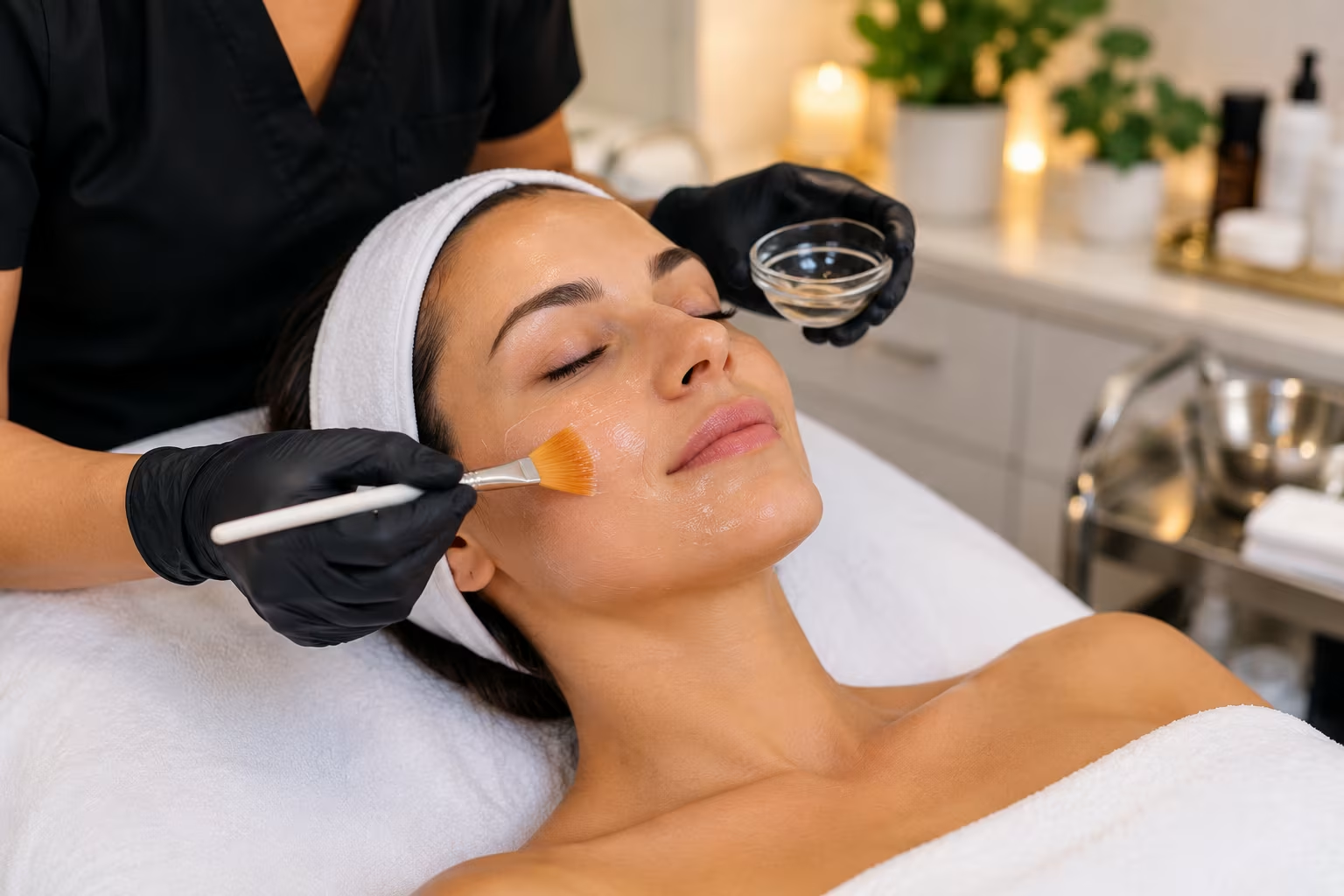
There is a particular kind of skin complaint that is hard to put into words. It is not exactly a wrinkle, and it is not exactly a breakout. It is more of a feeling that your complexion has lost its clarity, that the tone is a little uneven, the texture is a little rough, and the glow you used to see in the mirror has quietly faded into something flatter. For discerning clients who invest in their skin the way they invest in the rest of their self care routine, this is often the moment a chemical peel enters the conversation.
Unlike a quick facial or an at home exfoliant, a professionally administered peel is a clinical treatment designed to deliver visible, measurable improvement, and it remains one of the most trusted tools in skincare for exactly that reason.
Why Do Some People Develop Uneven Skin Tone and Texture Over Time?
Skin renews itself constantly, but that renewal process naturally slows with age, sun exposure, and years of accumulated environmental stress. The result is a buildup of dull, thickened outer skin cells that do not reflect light the way fresh skin does, along with uneven pigment distribution that shows up as patchiness or discoloration.
What Causes Sun Damage and Pigmentation to Build Up on the Skin?
Cumulative ultraviolet exposure triggers excess melanin production in certain areas of the skin, which over years can develop into visible sun spots, patchy discoloration, and a generally uneven complexion, even in people who have been diligent about sunscreen more recently in life.
Why Does Skin Lose Its Glow and Start to Look Dull?
As cell turnover slows, dead skin cells accumulate on the surface rather than shedding efficiently. This creates a duller, less reflective appearance and can make even well moisturized skin look tired or lackluster.
What Causes Large Pores and Rough Texture?
Excess oil production, sun damage, and a buildup of debris within pores can all contribute to enlarged pores and a rougher overall skin texture, particularly through the T zone.
How Does a Chemical Peel Actually Improve These Concerns?
A chemical peel works by applying a carefully formulated solution to the skin that accelerates exfoliation at a controlled, professional depth, well beyond what any at home product is able to achieve safely. This process removes the dull outer layer of skin, encourages fresh cell turnover, and can stimulate collagen production depending on the strength and type of peel used.
The result is skin that appears brighter, smoother, and more evenly toned, often within days of a single treatment, with continued improvement over a course of sessions for more significant concerns like hyperpigmentation or texture irregularities.
What Skin Concerns Can Chemical Peels Address?
At Vitalize Wellness, chemical peels are used to target a wide range of concerns, and part of what makes them appealing to clients who want a refined, considered approach to their skin is how precisely they can be tailored. Peels can be formulated and layered to address sun damage and pigmentation, dullness and lack of radiance, uneven skin texture from enlarged pores or rough patches, mild acne and post breakout marks, and general skin health maintenance for clients who simply want their complexion to reflect the same level of care they put into everything else.
For clients dealing with more visible discoloration, exploring the practice's approach to hyperpigmentation and sun damage and pigmentation offers a clearer picture of how a peel fits into a broader treatment plan.
How Is a Professional Chemical Peel Different From At Home Exfoliation?
At home products, even well formulated ones, are designed with built in limits for safety in an unsupervised setting. A professional peel, administered under clinical guidance, can be adjusted in strength and formulation to match your specific skin type, concern, and tolerance, delivering results that at home care simply cannot replicate.
This is particularly relevant for clients who have tried a rotation of serums and exfoliants without seeing the transformation they are looking for. A peel is not a replacement for a good home routine, but it is often the missing piece that allows a home routine to work more effectively afterward.
What Should You Expect During and After a Chemical Peel?
The experience itself is refined and relatively quick, typically involving a short application period followed by a defined amount of downtime that varies depending on the depth of the peel chosen. Lighter peels may involve minimal visible peeling with a quick return to normal activities, while deeper formulations may involve several days of noticeable flaking as the skin renews itself.
A knowledgeable provider will walk through exactly what to expect based on your skin type and goals, along with a personalized aftercare plan to protect and extend results, since sun protection and gentle skincare in the days following treatment play a significant role in the final outcome.
Who Is a Good Candidate for a Chemical Peel?
Chemical peels are well suited to clients who want visible, efficient results without more invasive intervention, who are dealing with dullness, uneven tone, or texture concerns that home care has not fully resolved, or who simply want to maintain their overall skin health with a periodic professional treatment rather than waiting until concerns become more pronounced. A consultation is the best way to determine which type and strength of peel aligns with your skin and your expectations.
Where Does Radiant Skin Actually Come From?
The honest answer is that it rarely comes from a single product, no matter how well marketed. It comes from a considered, professionally guided approach that treats your skin with the same precision you would expect from any other worthwhile investment. A chemical peel in Cary, North Carolina offers exactly that, a clinical, results driven treatment that restores clarity, tone, and texture in a way that at home care alone cannot match.
This article was updated in September 2026 to reflect current chemical peel treatment options available at Vitalize Wellness in Cary, North Carolina. Explore the full chemical peels service page or return to the Vitalize Wellness homepage to see the full range of skin care offerings.
Frequently Asked Questions
How often should you get a chemical peel for the best results? Frequency depends on the type of peel and your skin goals, though many clients benefit from a series of treatments spaced several weeks apart, followed by periodic maintenance sessions.
Do chemical peels help with sun damage and dark spots? Yes, chemical peels are commonly used to improve the appearance of sun damage and pigmentation by accelerating the removal of damaged surface skin cells and promoting more even toned renewal.
Is there downtime after a chemical peel? Downtime varies by peel depth. Lighter peels may involve little to no visible recovery, while deeper peels can involve several days of noticeable peeling as the skin renews.
Can a chemical peel improve rough texture and large pores? Yes, by removing built up surface debris and encouraging fresh cell turnover, chemical peels can visibly refine texture and minimize the appearance of enlarged pores over time.
What should you avoid before getting a chemical peel? It is generally recommended to avoid excessive sun exposure and certain active skincare ingredients in the days leading up to treatment, and a provider will give specific guidance based on your skin.